

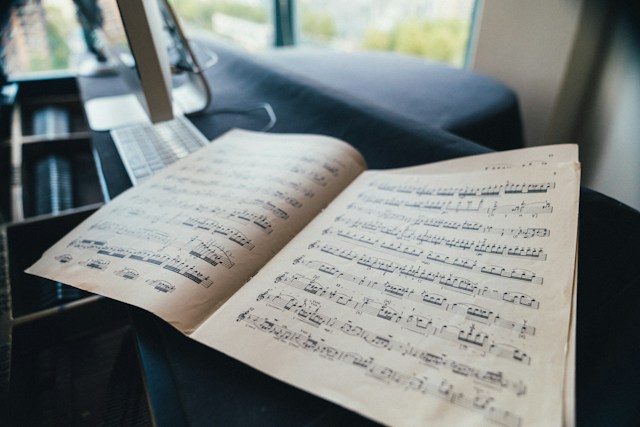
Struggling to read sheet music can make learning new songs frustrating, slow down practice, and limit your confidence when approaching unfamiliar pieces. Relying entirely on playing by ear may also leave gaps in your musical understanding, making it harder to develop consistency and versatility. Discover how combining ear training with sight-reading can sharpen musical skills, improve confidence, and make learning new music more rewarding.
Ear Training Versus Sight-Reading
Ear training and sight-reading develop different skills, but they support each other. Playing by ear teaches you to recognize intervals, chord changes, and phrasing. Notation shows exactly when a note begins, how long it lasts, and how it relates to the surrounding harmony. A discussion about the connection between sight-reading and ear training highlights how reading may reinforce the sounds musicians learn to recognize.
Try combining both methods. Listen to a short passage, work it out by ear, and then compare your version with the written music. Digital piano scores can make this exercise practical because musicians, students, and educators can access printable arrangements for immediate practice. Differences in rhythm or voicing quickly reveal where your ear needs more attention. Developing familiarity with different instruments can also improve musical understanding, as explained in this guide to learning more than one instrument.
The Cognitive Rewards of Notation
Reading notation asks the brain to process several kinds of information at once. Your eyes track pitch, rhythm, dynamics, and articulation while your hands or voice turn those symbols into sound. At the same time, you’re anticipating what comes next and listening for mistakes. This coordination strengthens attention, pattern recognition, and working memory during practice.
A simple exercise can build these abilities without becoming overwhelming. Choose eight measures at an easy level, scan the key signature, and identify repeated patterns before playing. Keep a steady pulse even if you miss a note. On the second attempt, correct one problem area instead of restarting after every error. Ten focused minutes can produce better reading habits than repeatedly struggling through a difficult piece from beginning to end.
Exploring Accurate Modern Arrangements
Modern arrangements give readers a useful bridge between familiar music and formal notation. A song you already know provides an internal reference for melody, tempo and phrasing, so you can focus on how those sounds appear on the page. Accurate editions also show details that simplified online tutorials may leave out, including rests, inversions and dynamic changes.
Before practicing, check whether the arrangement matches your instrument and skill level. Look at the key, rhythmic density, and hand span or vocal range. An intermediate label alone may not tell you enough. Preview several measures and identify the hardest feature. If the page contains sixteenth-note syncopation that you haven’t studied, practice that rhythm by clapping it first. Familiar repertoire stays enjoyable while still teaching transferable reading skills.
Bridging the Gap to Fluency
Fluency develops through frequent contact with manageable material. A practical sight-reading practice method emphasizes recognizing patterns and continuing through mistakes, two habits that keep reading musical instead of mechanical. Choose pieces slightly below your performance level and read each one only once or twice. Repeated rehearsal eventually becomes memorization, which no longer tests sight-reading.
Set a slow tempo, count one measure before starting, and keep your eyes slightly ahead of your hands. Afterward, mark the type of mistake you made, such as a missed accidental or lost beat. This turns each attempt into useful feedback. Music notation still matters because it lets you meet an unfamiliar page and hear its shape before every note feels comfortable.