

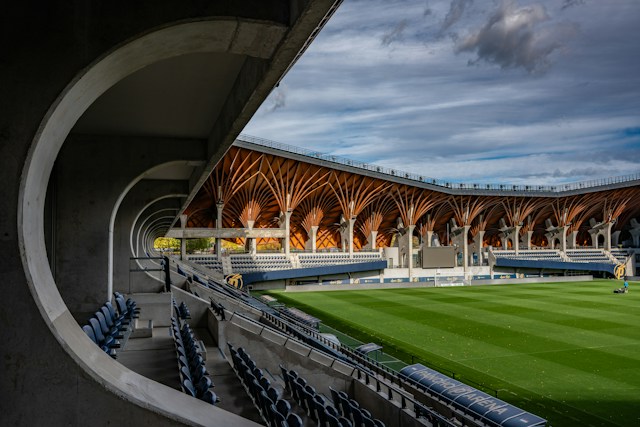
A sold-out crowd doesn’t guarantee that a sports arena has reached its full earning potential. Ticket sales create the foundation, but much of an arena’s profit comes from purchases, services and experiences delivered before, during and after the event. Operators that study these less visible revenue sources can increase per-guest spending while also reducing friction for fans.
The strongest results come from connecting operational decisions. Food service, premium spaces, digital tools and demand forecasting all influence how much guests spend and how likely they are to return.
Looking Past Primary Ticket Revenue
Primary ticket sales receive the most attention, yet their financial value has limits. Teams may share ticket income with leagues, performers or event partners and fixed seating capacity restricts growth. The secondary ticket markets also show how demand can extend beyond an arena’s original pricing structure.
Operators can capture more value by offering official ticket upgrades, parking reservations and bundled event packages. A guest buying a standard seat, for example, might pay for early entry or access to a pre-event hospitality area.
Track revenue per attendee alongside total attendance. This metric reveals whether a busy event produces strong commercial results or simply fills seats. Comparing it across event types also helps managers identify which audiences are most open to upgrades.
Optimizing High-Margin Secondary Spending
Food, merchandise and interactive attractions often provide stronger margins than admission. Their success depends on speed and placement. A crowded concession line can cause a guest to abandon a purchase, while confusing menus slow transactions during the busiest parts of an event.
Mobile ordering, self-service kiosks and contactless payment can reduce those barriers. Operators considering payment hardware can review the benefits of a modern POS terminal system before deciding where upgrades will have the greatest effect.
Menu design matters too. Highlighting a few popular bundles makes ordering easier and can raise the average transaction. Test the offer at one stand for three events, then compare order values, service times and abandoned carts with similar locations. Small operational trials provide clearer evidence than arena-wide changes made all at once.
Upgrading Premium Guest Amenities
Premium experiences can produce income well beyond traditional private suites. Flexible lounges, reserved dining areas, family spaces and upgraded entry options allow an arena to serve several customer groups without rebuilding entire seating sections.
The practical challenge is coordinating each touchpoint. Venu Plus provides tech-enabled revenue and guest experience solutions for entertainment venue operators seeking to improve destination performance. External support may be useful when an arena needs to connect commercial planning with day-to-day operations across multiple guest areas.
Start by examining spaces that sit empty during events. An underused club room might become a bookable group area, while a wide concourse zone could host a sponsored activity. Price each amenity according to demand, staffing needs and capacity. Guest feedback should then confirm if the experience delivers enough value to support repeat bookings.
Data Strategies That Predict Fan Demand
Useful demand forecasting combines ticket activity with transaction history, event timing and guest behavior. A Friday evening rivalry game may require more mobile food pickup capacity, while a weekday family event could generate stronger demand for group packages and earlier dining.
Industry analysis on unlocking value in sports points to the commercial potential of stronger fan relationships. Arenas can begin with a simple dashboard that tracks ticket pace, average spending, arrival times and product availability by event.
Keep data collection tied to a clear purpose. If managers want to reduce concession congestion, they should compare purchase times with entry scans and stand-level sales. If the goal is better inventory planning, hourly sales patterns will be more useful. Clear retention rules and transparent privacy notices also help maintain guest trust.
The most revealing arena metric may be the gap between attendance and participation. When thousands of guests arrive but few buy food, reserve upgrades or use premium areas, the venue has a specific operational problem to investigate. Closing one measurable gap can create lasting revenue without adding another seat.